

Mizna Online

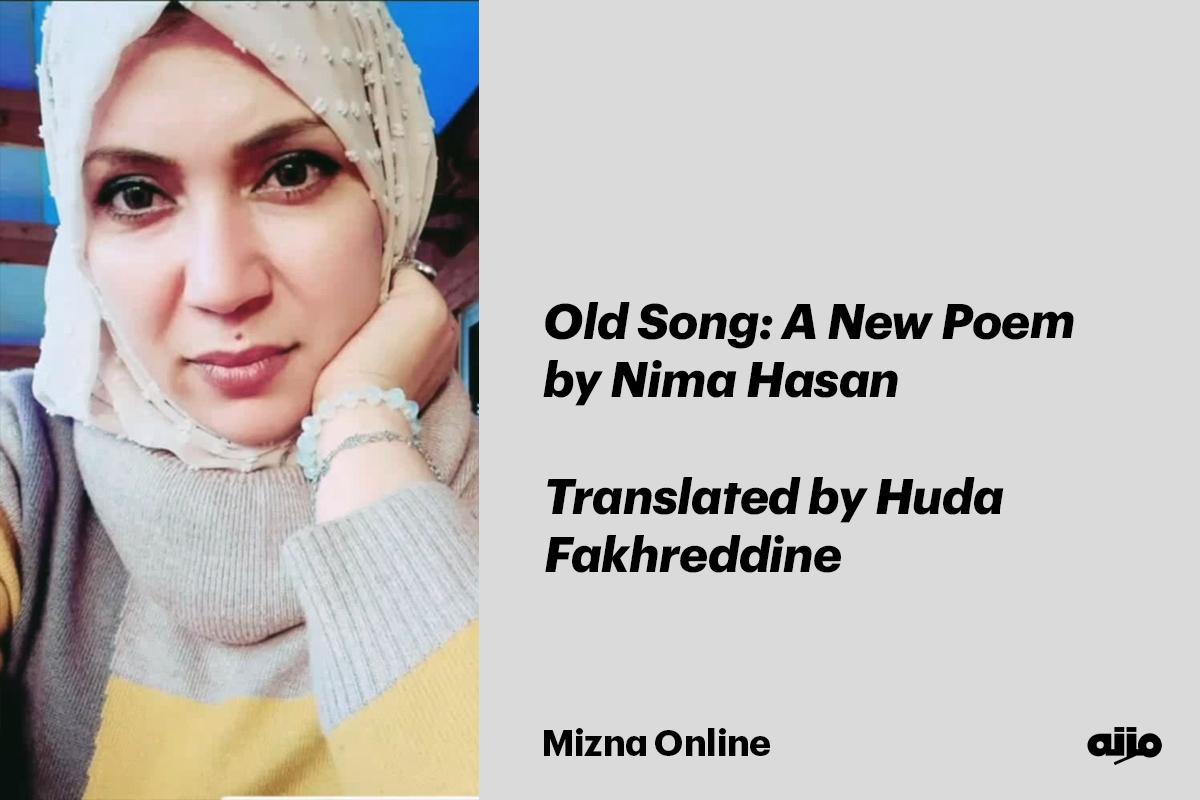
Old Song: a New Poem by Nima Hasan
September 3, 2025
by Nima Hasan
I love you—
Force the city to hear it out loud.
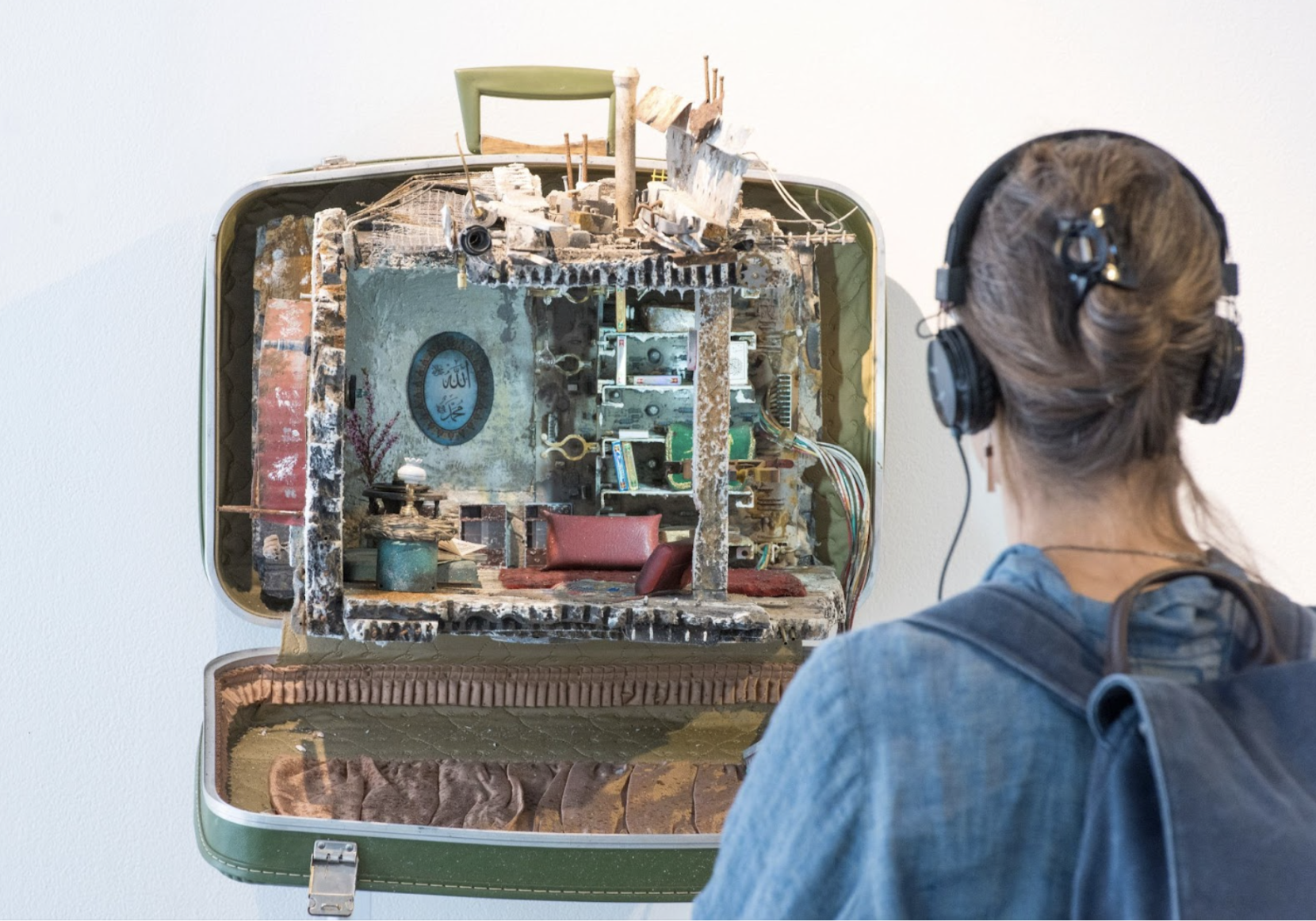
Beyond Ruins: Exploring Architectural Nostalgia in Syrian...
August 16, 2025
by Sami Ismat
But the immense neglect and physical destruction of these places along the societal fabric puts doubt in whether the new free Syria, with its new and varied diasporic community, can reclaim a healthy and thriving society with a collectivist living philosophy. It is a challenge that requires utopian imagings as well as forms of expression and commemoration of the sacrifices and displacement faced by the people.
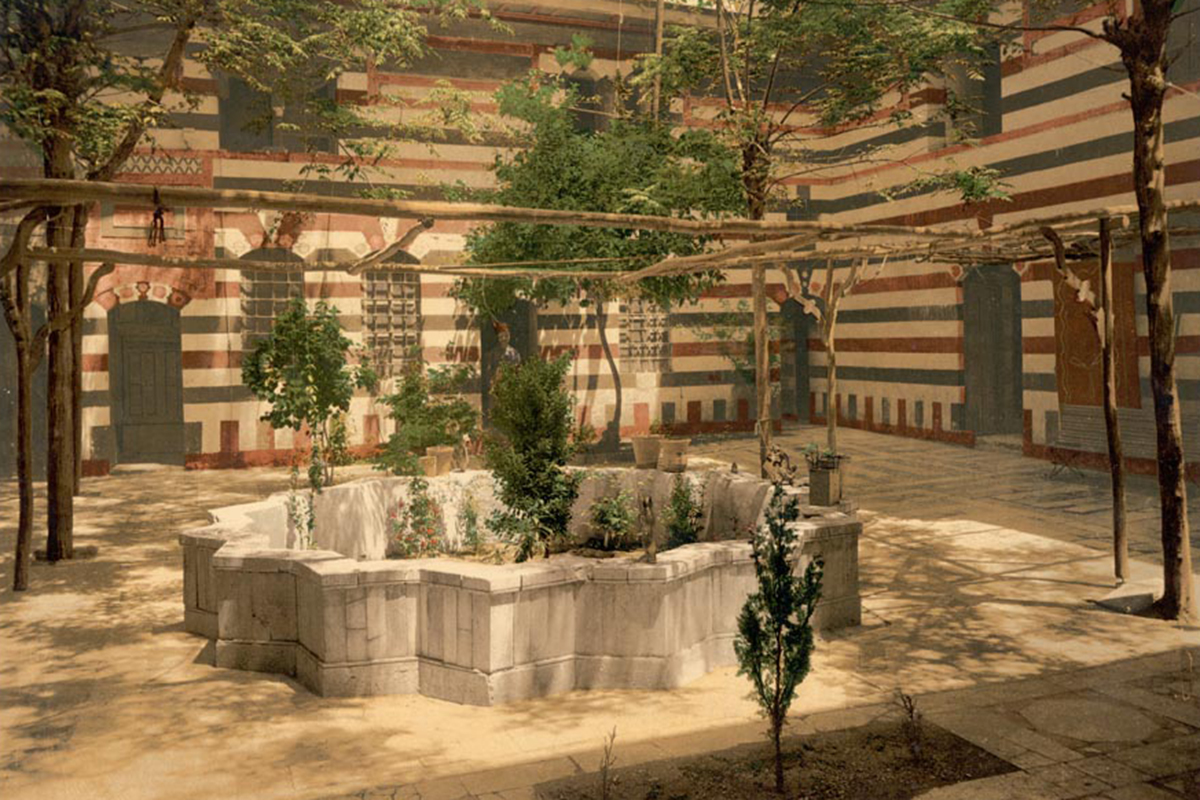
“the tart air from Damascus”—New Syrian Poetry
August 7, 2025
by M. Hakim
In this debut poetry publication by Syrian-American mathematician, musician, and writer M. Hakim, I am reminded of the ways grief acts on language in the most intimate details. In our exchange for editing the poem, Hakim described the ways punctuation is governed not by traditional grammar, but by associations of grief: sentences pairing with each other like ghosts to former inhabitations, spectral residues of once-restricted sites like Qasioun, the gifting of an oud, and the speculative...
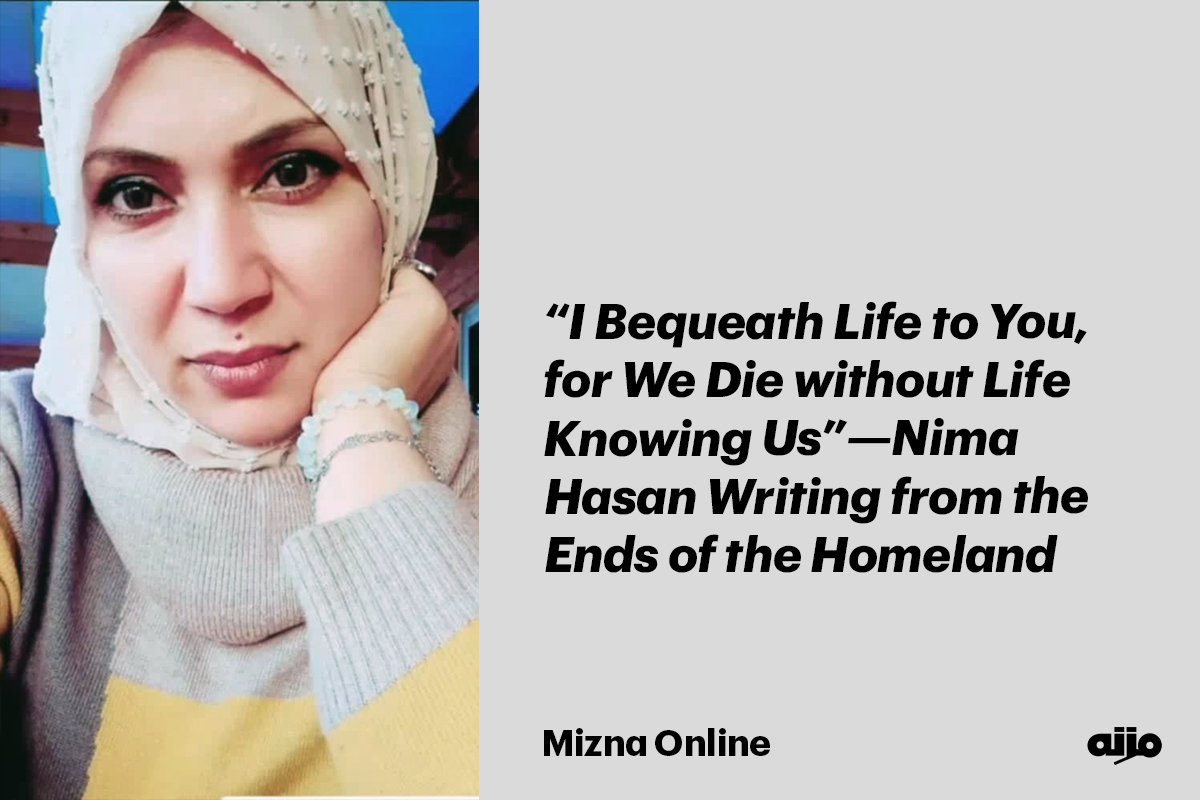
“I Bequeath Life to You, for We Die without Life Knowing...
July 28, 2025
by Nima Hasan
Compiled and edited by Rania Jawad, translated by Malaka Shwaikh On March 2, 2024 Nima Hasan wrote: I believe there is some secret in the elements of Gaza that makes us cling to a life that was never a life. I have always tried to keep an eye on death, making plans to distract it, to make it wait, so that it would get bored and leave what remains of me, my remains. We are all remains here. It is only the angle from which the photograph is taken that determines whether we are...
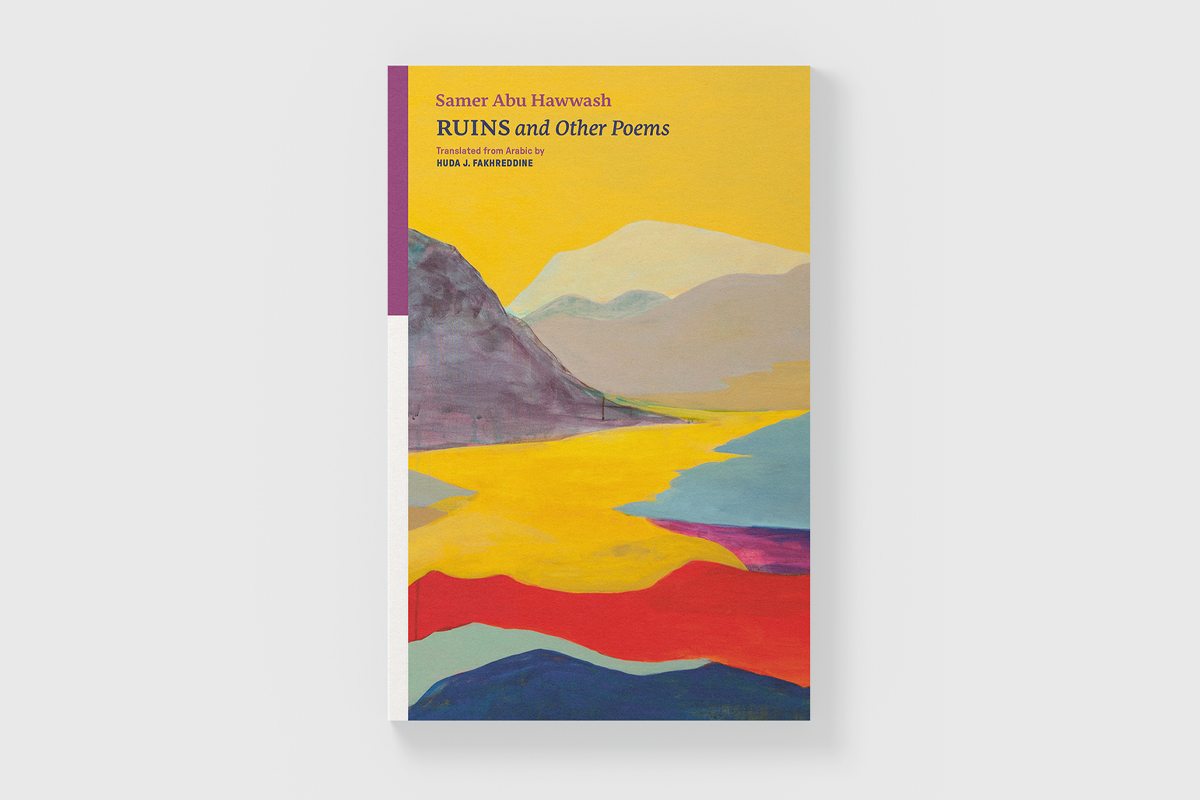
A Box of Dates on the Kitchen Table
July 2, 2025
by Samer Abu Hawwash
trans. Huda Fakhreddine In anticipation of Huda Fakhreddine’s forthcoming translation of Samer Abu Hawwash’s Ruins and Other Poems, Mizna presents this stunning new poem on the ways Zionist settler colonialism infiltrates Palestinian life even through mundane, ordinary objects. As with other works like “from the river to the sea,” Abu Hawwash’s poem haunts, and yet returns us impossibly to the land, in all the details. —George Abraham, Editor-at-Large
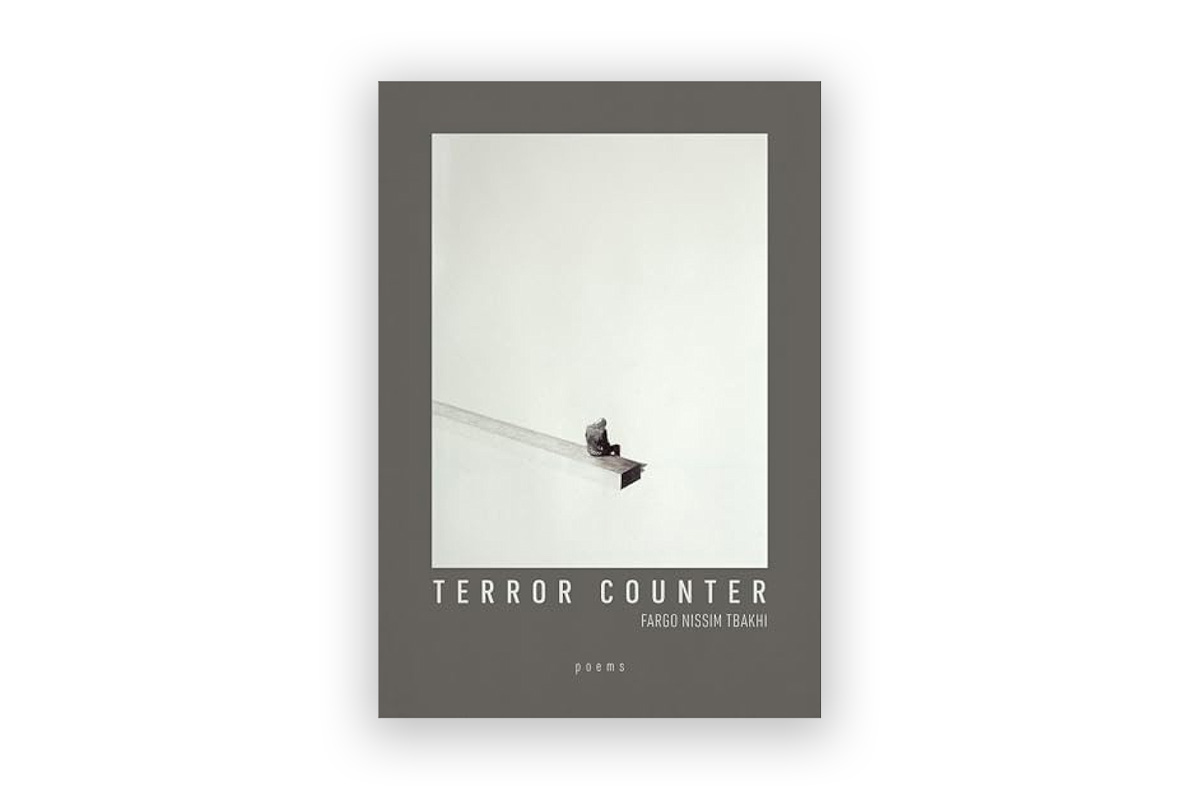
TERROR COUNTER—Excerpts
June 24, 2025
by Fargo Tbakhi
Today, Mizna is honoring the launch of beloved contributor and Palestinian performance artist Fargo Tbakhi’s debut poetry collection TERROR COUNTER. This ambitious, experimental collection is, at once, a battle cry, a love letter, a reminder that we will die and that we are not dead. Lena Khalaf Tuffaha writes: “Through a variety of invented forms and stirring unravelings, these poems tunnel, excavate, eulogize, exclaim, and most elegantly imagine where we might go once we reject...
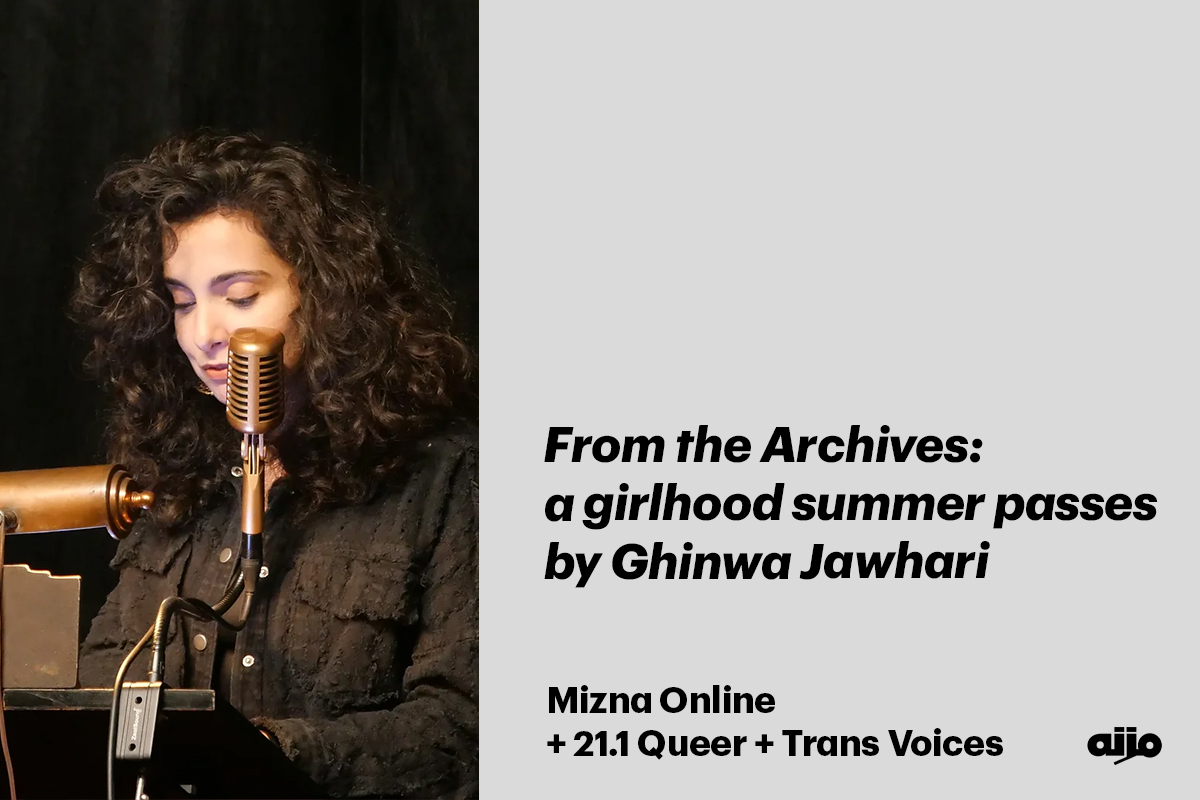
a girlhood summer passes
June 19, 2025
by Ghinwa Jawhari
you curl against me like a burning hair
as airstrikes pock the hillside, bare earth
red as afterbirth. upturned. we knob until
we find fairuz on the radio.
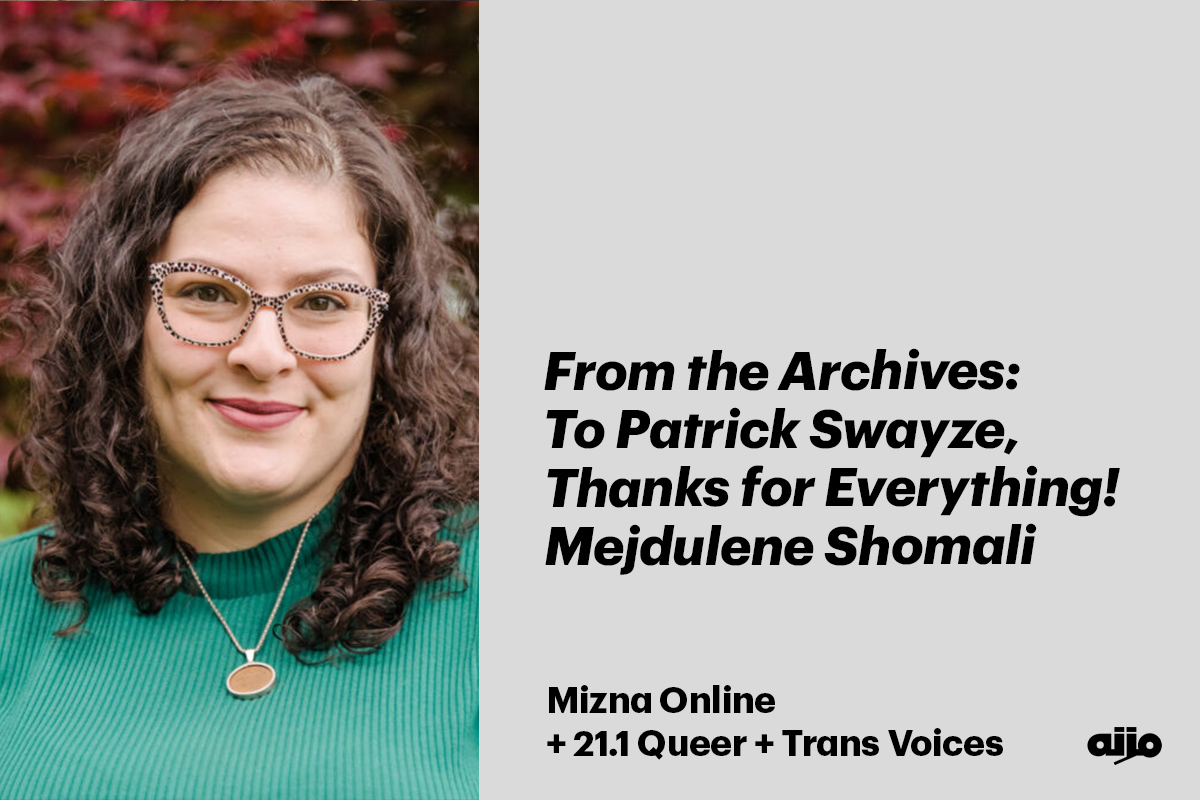
To Patrick Swayze, Thanks for Everything! Mejdulene Shomali
June 14, 2025
by Mejdulene B. Shomali
the bouncer of my road house heart
my wild Johnny
the first man i thought to love
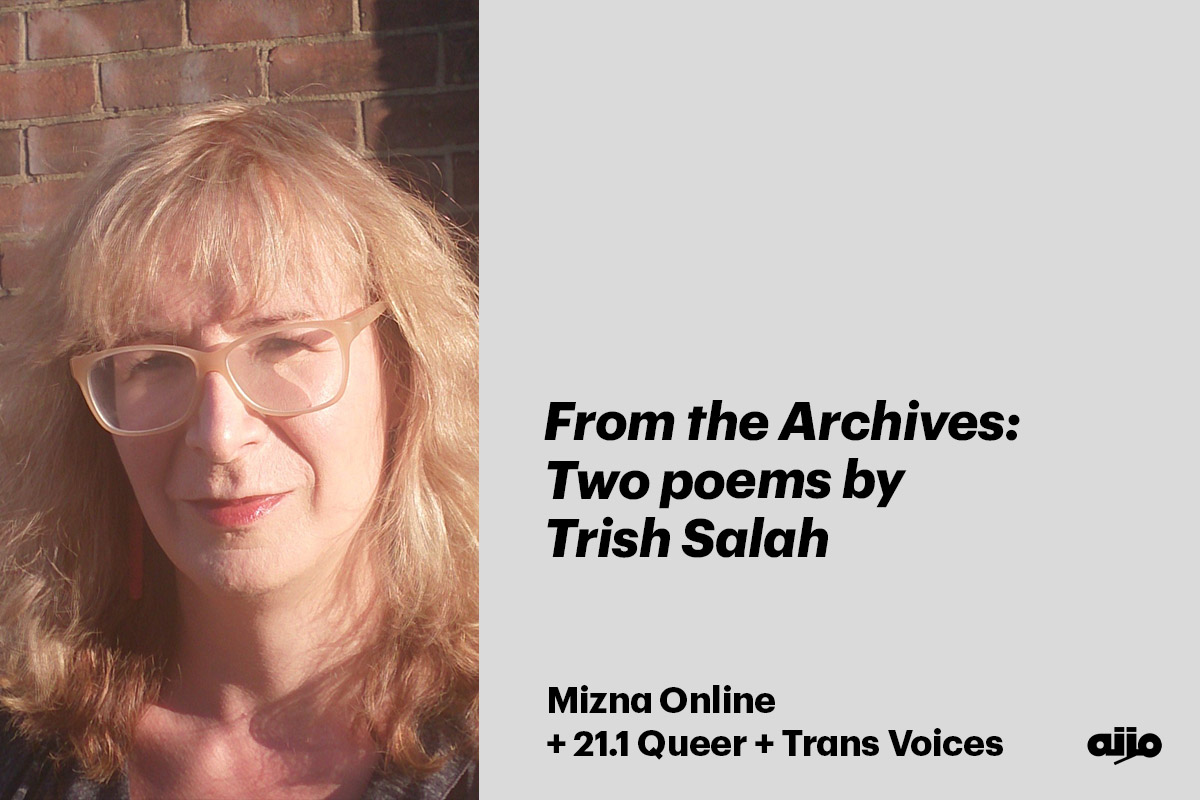
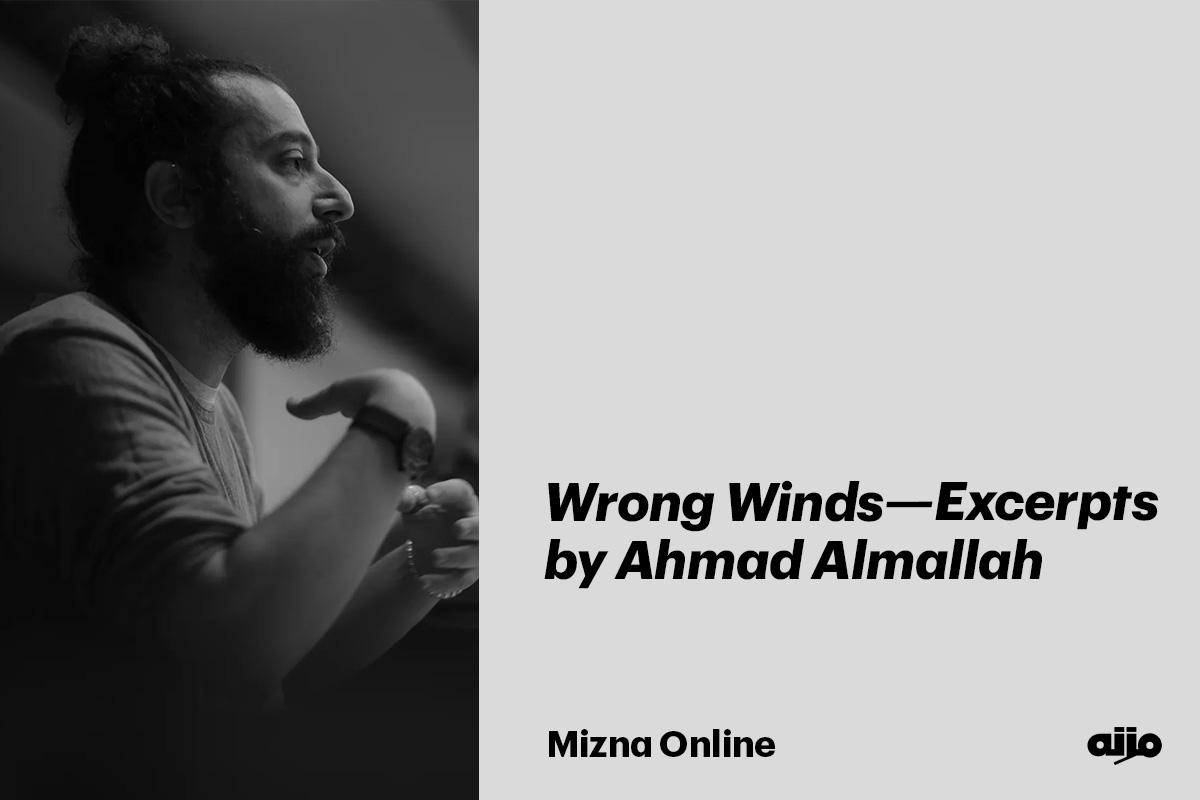
Wrong Winds—Excerpts
June 5, 2025
by Ahmad Almallah
I don’t know mainly how
to save myself from my
words: I would want them
all, alive and well, or at
once, all at once, burning.
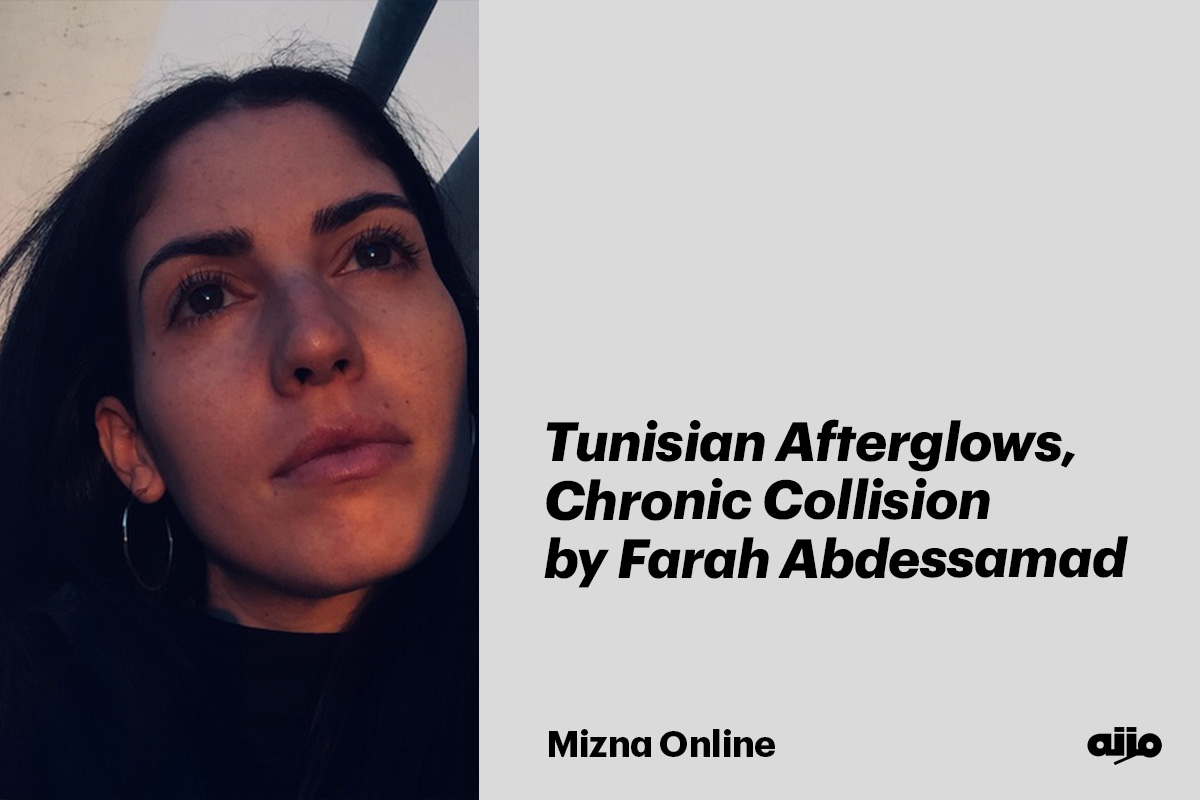
Tunisian Afterglows, Chronic Collision
May 29, 2025
by Farah Abdessamad
While omniscience is often equated with divinity, to forget is to be human—it is to die a human death. Remembering, then, works to resist the natural course of decay and extinction. We excavate our mind like we fumble in a wild garden; we scratch underneath family stories, tales, poems, books. To remember is to take an unknown journey and sometimes we come across special objects.
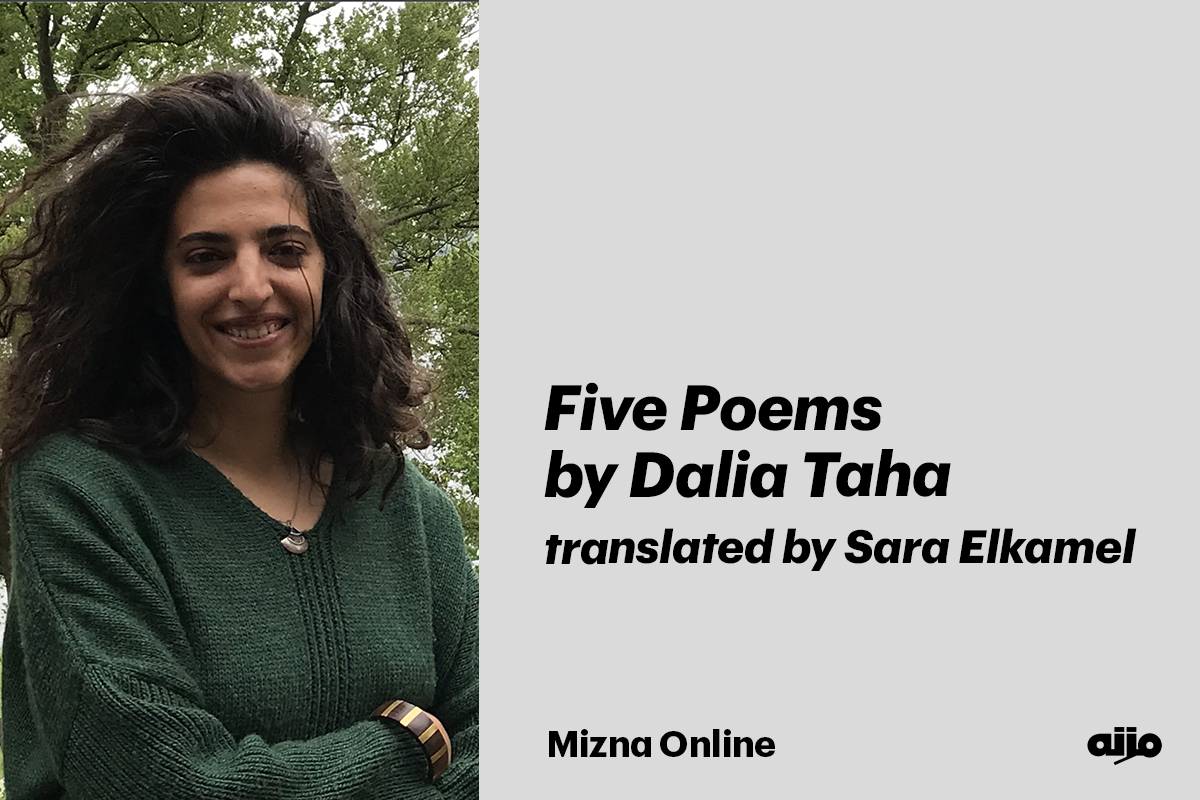
Four Poems
May 22, 2025
by Dalia Taha
Protect the head, where the algae grow,
and the sun screams from the summit.
The head that has stared for centuries
into the sea as it closed its eyelids,
and never blinked.
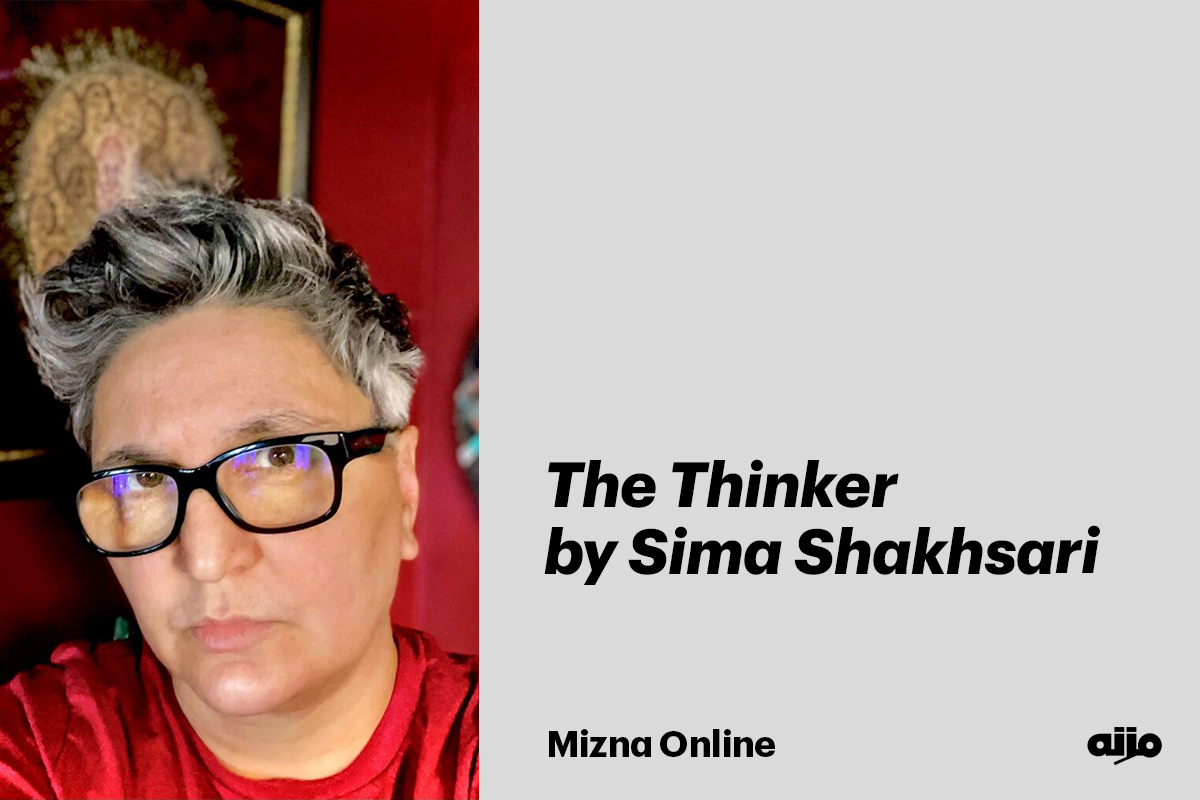
The Thinker
May 16, 2025
by Sima Shakhsari
We are flesh measured in kilograms,
my Palestinian colleague says in desperation
But you are a thinker not a doer
So you do nothing
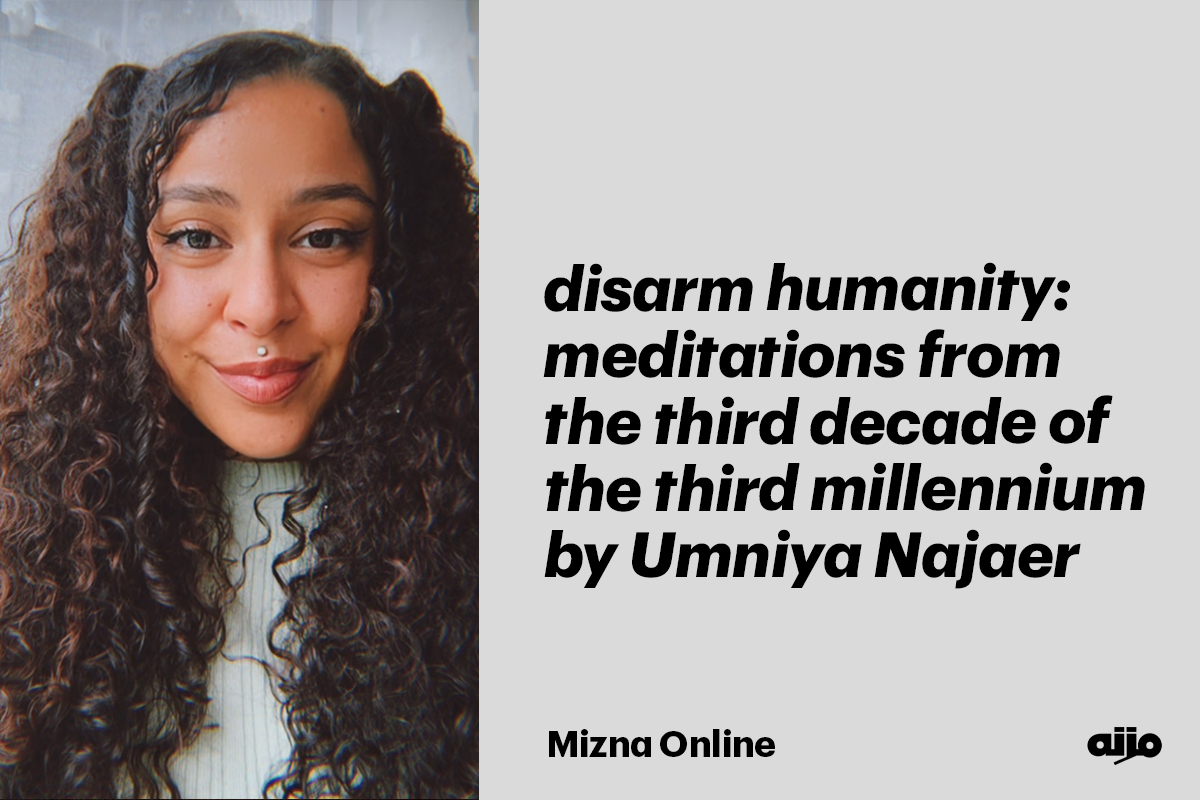
disarm humanity: meditations from the third decade of the third...
May 2, 2025
by Umniya Najaer
IF THERE IS AN UPPER LIMIT TO THE HUMAN CAPACITY TO COMPUTE MASS ATROCITY THEN THERE MUST BE A HARD LIMIT ON LETHAL TECHNOLOGIES BECAUSE THE IMPLICATION IS THAT AS VIOLENCE ESCALATES IT ALSO BECOMES INCREASINGLY INCOMPREHENSIBLE
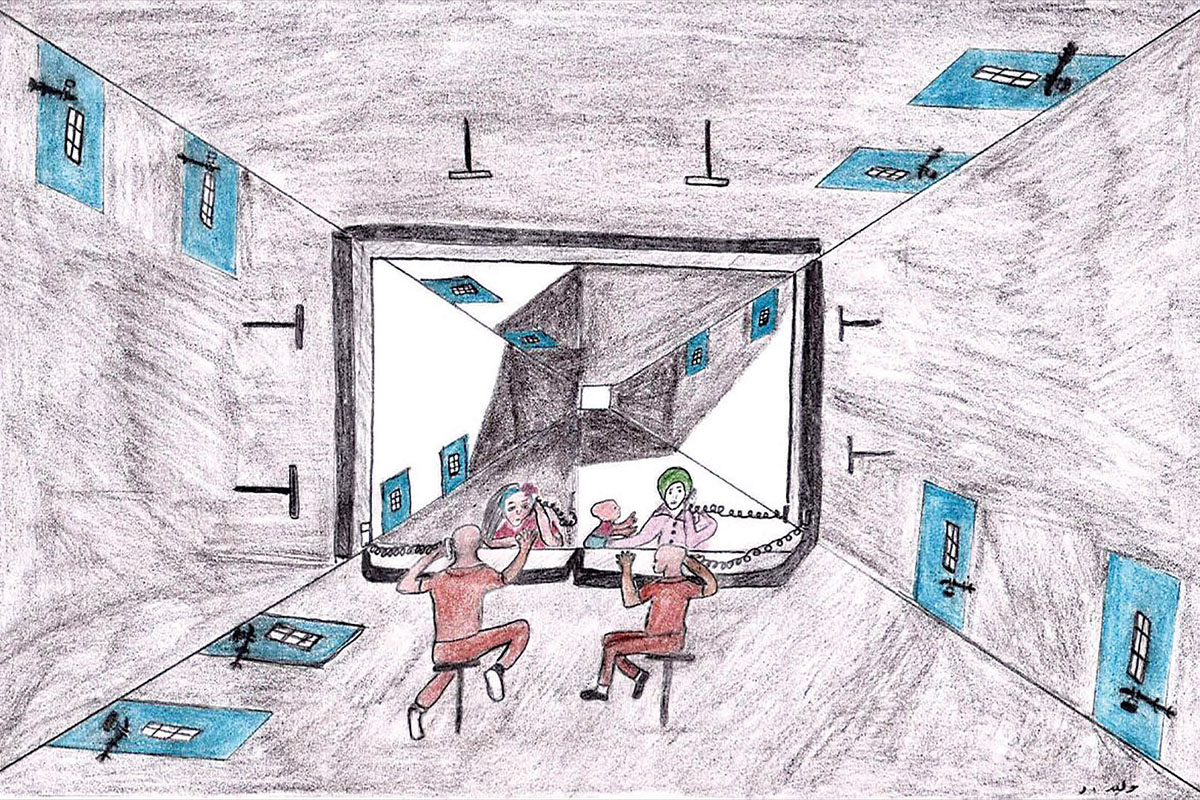
On Parallel Time
April 25, 2025
by Walid Daqqa
We are a part of history, and history—as it is well known—is a condition and an action in the past. Except us: we are a past continuous and neverending. We address you all from it presently, so that it does not become your future.
Tags▼
Authors▼
- Farah Abdessamad
- Ahmed AbdulMageed
- Andrea Abi-Karam
- George Abraham
- Sarona Abuaker
- Lamia Abukhadra
- Shireen Ahmed
- Maya Abu Al-Hayyat
- Ahmad Almallah
- Yahya Ashour
- Sophia Attigui
- Farah Barqawi
- Moustafa Bayoumi
- Walid Daqqa
- Mahmoud Darwish
- Mohammed El-Kurd
- Abdelrahman ElGendy
- Olivia Elias
- Hazem Fahmy
- Summer Farah
- Athena Farrokhzad
- Banah el Ghadbanah
- Anees Ghanima
- M. Hakim
- Mazen Halabi
- Noora Said and Yousef Hamad
- Maen Hammad
- Nima Hasan
- Samer Abu Hawwash
- Nour Eldin Hussein
- Sami Ismat
- Randa Jarrar
- Ghinwa Jawhari
- Fady Joudah
- Najwa Juma
- Lucia Kagramanyan
- Mohja Kahf
- Ismail Khalidi
- Tariq Luthun
- Leila Mansouri
- Aurielle Marie
- Mira Mattar
- Nadine Murtaja
- Heba Abu Nada
- Umniya Najaer
- Ibrahim Nasrallah
- Haya Abu Nasser
- Nabil S
- Omar Sakr
- Trish Salah
- Sima Shakhsari
- Charif Shanahan
- Mejdulene B. Shomali
- Jen Siraganian
- Danez Smith
- Huda Soboh
- Dalia Taha
- Fargo Tbakhi
- Mosab Abu Toha
- Raya Tuffaha
- Diaa Wadi
- Mohammed Zenia