



July 2, 2025
A Box of Dates on the Kitchen Table
trans. Huda Fakhreddine
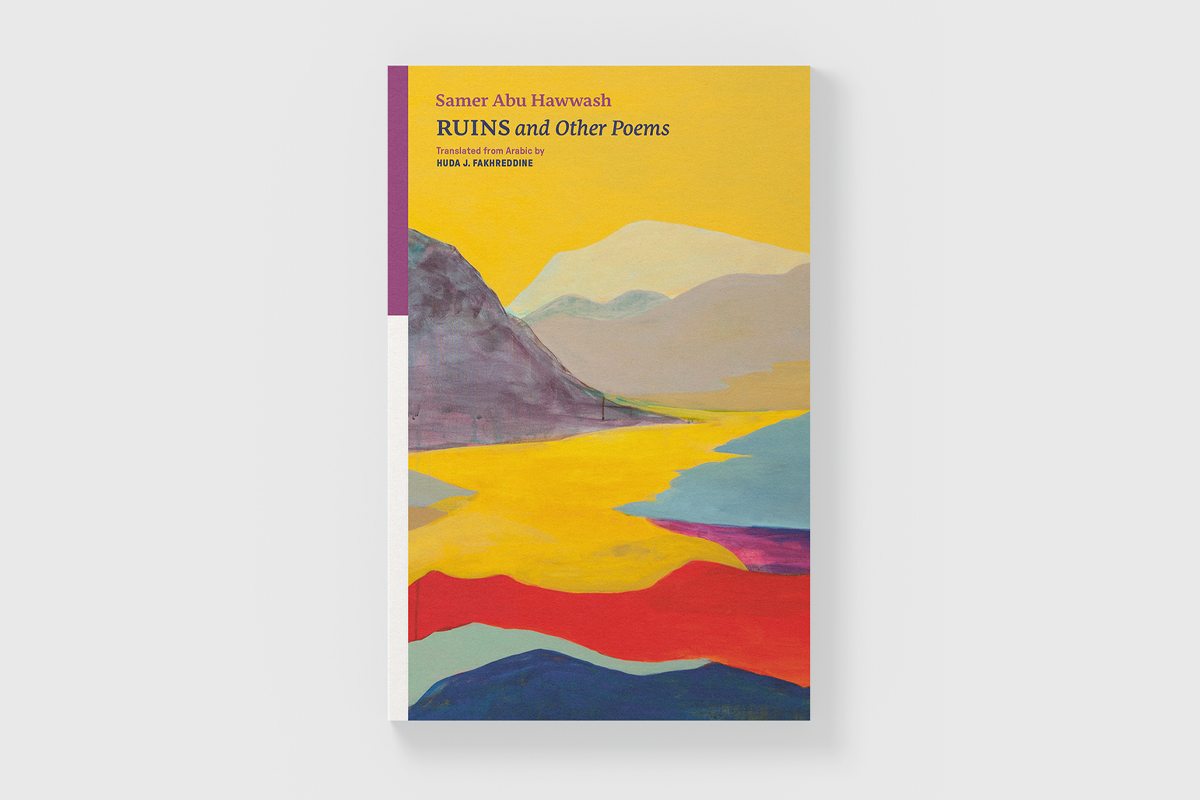
In anticipation of Huda Fakhreddine’s forthcoming translation of Samer Abu Hawwash’s Ruins and Other Poems, Mizna presents this stunning new poem on the ways Zionist settler colonialism infiltrates Palestinian life even through mundane, ordinary objects. As with other works like “from the river to the sea,” Abu Hawwash’s poem haunts, and yet returns us impossibly to the land, in all the details.
—George Abraham, Editor-at-Large
“All but those hands,” my beloved says, “that is an obvious truth.”
“But ours is the memory of the hands,” I say,
“the hands that used to care and nurture and love,
the hands that bled their sweat into the sap, the trunk, the frond—
the hands that are that palm leaf
eternally waving to those departed.”
—Samer Abu Hawwash
A Box of Dates on the Kitchen Table
On the kitchen table
is what’s left of dates in a box.
I don’t know why we keep it still,
there for us to see every morning,
when we make our coffee,
every noon while we prepare lunch,
every time we go to get a glass of water,
every time we want to see it and every time we don’t,
there it stands among other things, sometimes hidden
and sometimes revealed, gleaming in the dark.
The box was not always here.
A few days ago, it was on another table
in the only Arab shop in this city.
And it was there that we missed everything.
We missed the brand name, “King David,” on the box,
the star and the name of the settlement on the back.
I can hear the pontificators now:
“Don’t you know the ABCs of boycott.
Carefully read the back side.
Look for the symbols and signs, the hidden and the visible.
Decode everything on the product.
Did you consult the list?”
I look at my beloved and say,
“But aren’t these dates ours at the end of the day?
Each on one of them in this box
and in all the other boxes?
Isn’t all ours to begin with,
the soil where they grew, ours.
the water that nourishes them, ours.
the shade they make, ours.
Maybe even those hands that grew them,
those are probably ours too.”
“All but those hands,” my beloved says, “that is an obvious truth.”
“But ours is the memory of the hands,” I say,
“the hands that used to care and nurture and love,
the hands that bled their sweat into the sap, the trunk, the frond—
the hands that are that palm leaf
eternally waving to those departed.”
At home, I stand with my beloved,
puzzled over the box,
as if it were a dead animal.
I tell her, “It’s just a box, a silly, miserable box,
nothing more than wrapping and a brand,
a made-up name, an advertisement.
Don’t you know, my love, that made-up names and ads
are nothing but lies? You know how deceiving a box can be.”
“But this box has become a country,” she says.
“It’s not really a country,” I say, “It’s just another box, a made-up name, a brand.
Besides, didn’t you see the expiration date
on the back of the box?”
Alone in the evening, I stare at the box abandoned on the table,
the box that became a grave, now expanding.
I remind myself: it’s just a box, a silly, miserable box.
O palm trees of Jericho,
palm trees of Khan Younis, of Deir al-Balah,
do you see me as I tear up the box and throw it in the trash bin?
Do you see how the trash bin keeps growing larger and larger,
until it can hold all the boxes from all the stores, in all the cities,
until nothing remains but a single date.
I peel off its pale, lifeless skin,
and reveal the gleaming stone at its heart.
And in the stone, I see all things,
past, present, and future:
the houses, the fields, the clouds, the waves,
all that we call home.
I will strip the stone of all the names
it has falsely claimed along the endless paths of absence.
I will return it to its first name—
and return it to my heart.
علبة تمر على طاولة المطبخ
على طاولة المطبخ، ما بقي من حبّات تمر في العلبة
لا أعرف لماذا ما زلنا نحتفظ بها
هنا حيث نراها كلّ صباح ونحن نعدّ قهوتنا
وكلّ ظهيرة ونحن نعدّ الغداء،
وكلما دخلنا لجلب كوب ماء، أو كلما
أردنا أن نراها ولا نراها
هنا، بين أشياء أخرى تحجبها حيناً
وتبديها حيناً ساطعة في الظلام
لم تكن دوماً هنا؛
قبل بضعة أيام، كانت على طاولة أخرى
في المتجر العربيّ الوحيد في هذه المدينة
حيث فاتتنا رؤية كلّ شيء،
فاتتنا رؤية العلامة—”الملك داود“—أعلى العلبة،
مع النجمة واسم المستعمرة على ظهرها—
وأسمع الآن أصوات العالمين بالمسائل والأمور:
ألم تتعلّم ألف باء المقاطعة، أن تقرأ جيداً”
ما دوّن على ظهر العلبة،
أن تبحث عن الرموز والإشارات الخفيّة والظاهرة،
أن تفكك شفرة المنتجات،
“ألم تشاور ما جاء في القائمة؟
أنظر إلى حبيبتي، وأقول:
”لكنها، في نهاية الأمر، تبقى لنا،
كلّ حبة تمر في هذه العلبة
وفي كل العلب،
هي في الأصل لنا،
التربة، حيث نبتت، لنا
والمياه التي روتها،
والظلال التي صنعتها،
وربما حتى الأيدي التي رعتها“
هي الأخرى لنا
”إلا الأيدي،“ تقول حبيبتي، ”إنها الحقيقة الواضحة،“
”إذن لنا ذاكرة الأيدي،“ أقول،
”الأيدي التي كانت تربّت، وتحنو، وتحبّ
وتحفر عَرَقها في النسغ والجذع والسعفة
الأيدي التي هي السعفة
في تلويحتها الأبدية للراحلين“
في البيت، أقف وحبيبتي حائرَين حول العلبة
كأنما حول جثّة حيوان نافق،
أقول لها: ”إنها علبة، مجرد علبة سخيفة بائسة،
غلاف لا أكثر، علامة تجارية، اسم مصطنع، لوحة إعلانية،
ألم تري يا حبيبتي كم تكذب الأسماء المصطنعة واللوحات الإعلانية؟
ألم تري كم تخدع العلب؟“
”بيد أن هذه العلبة صارت بلداً،“ تقول
”لكنه ليس بلداً حقاً،“ أقول، ”إنه مجرد علبة أخرى، اسم مصطنع، علامة تجارية، ثم ألم تري تاريخ الصلاحية
على ظهر العلبة؟“
وحيداً في المساء أنظر إلى العلبة المهجورة على الطاولة،
العلبة التي صارت قبراً ما زال يتسع
وأذكّر نفسي: إنها مجرد علبة، علبة سخيفة بائسة،
فيا نخلات أريحا
ويا نخلات خان يونس
ويا نخلات دير البلح
أترينني وأنا أمزّق العلبة وأرميها في سلة القمامة
ثم كيف تكبر السلة أكثر فأكثر
حتى تصير تتسع لكلّ العلب في كل المتاجر، في كل المدن،
حتى لا يبقى سوى حبّة تمر واحدة
أنزع عنها قشرتها الشاحبة الميتة
وأكشف عن الحجر اللامع في قلبها
وفي الحجر أرى كلّ شيء:
ماضي الأشياء وحاضرها ومستقبلها،
البيوت والحقول والغيم والموج
وكل ما نسميه البلاد،
ثم أنزع عن الحجر ما انتحل له من أسماء
على دروب الغياب الطويلة،
وأعيده إلى اسمه الأول
وأعيد قلبي إليه.
Samer Abu Hawwash (b. 1972) is a Palestinian poet, novelist, editor, and translator, born in Lebanon. He is the author of 10 poetry collections including his debut collection Life is Printed in New York (1997), I’ll Kill You Death (2012), One Last Selfie with a Dying World (2015), Ruins (2020), and From the River to the Sea (2024). He is also the author of three works of fiction: The Journal of Photographed Niceties (2003), Valentine’s Day (2005), and Happiness or A Series of Explosions that Rocked the Capital (2007). Abu Hawwash is the translator of more than 20 volumes of poetry and prose from English including works by William Faulkner, J.G. Ballard, Sylvia Plath, Charles Bukowski, Langston Hughes, and many others. He lives in Barcelona, Spain where he currently works as the director of the Culture & Society section at Almajalla Magazine.
Huda Fakhreddine is a writer, translator, and Associate Professor of Arabic Literature at the University of Pennsylvania. She is the author of Metapoesis in the Arabic Tradition (Brill) and The Arabic Prose Poem: Poetic Theory and Practice (Edinburgh University Press), and the co-editor of The Routledge Handbook of Arabic Poetry (Routledge). Her translations include Jawdat Fakhreddine’s poetry collection Lighthouse for the Drowning (BOA Editions), The Universe, All at Once: Selections from Salim Barakat (Seagull Books), and Palestinian: Four Poems by Ibrahim Nasrallah (World Poetry). She is also the author of a book of creative nonfiction, Zaman saghīr taḥt shams thāniya (A Brief Time Under a Different Sun) and a poetry collection, Wa min thamma al-ālam (And Then the World). She is co-editor of Middle Eastern Literatures.
Related
The Bringers of Violence
Mizna At Home: Virtual Cinema Filmmaker Bios
Remembering the Beirut Port Explosion

various stages of unheard


